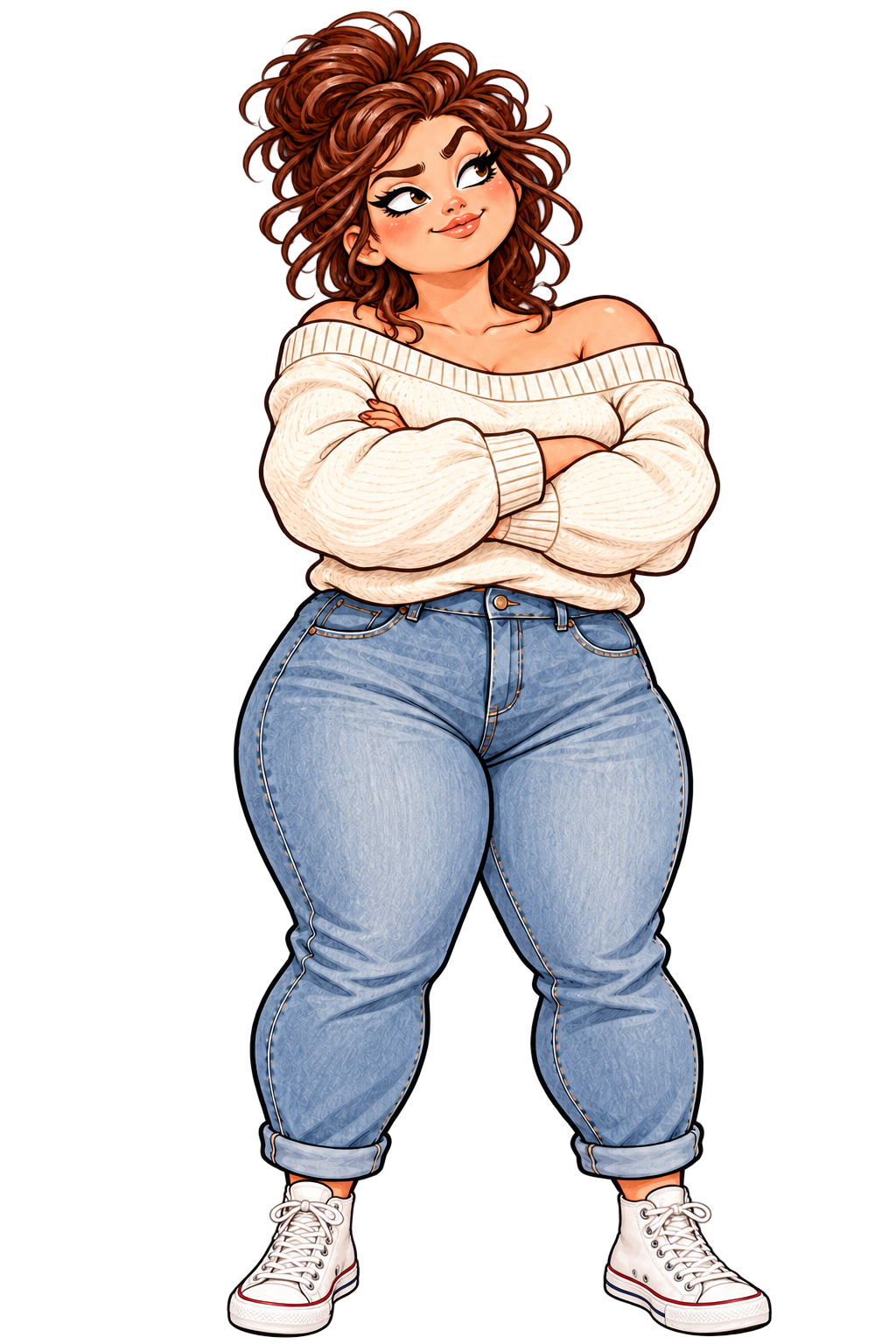
There is a particular kind of cruelty in being judged for something people know absolutely nothing about.
They see your weight gain.
They notice the changes in your appearance.
And somehow, that gives them permission to comment on your body, your eating habits, and how you supposedly don't take care of yourself.
As if they know.
As if they've spent a single day living inside your body.
As if they have any idea what you've been fighting just to feel normal.
What they don't see is the hormonal imbalance. The emotional exhaustion. The frustration of trying to understand why your body doesn't seem to cooperate.
And what they certainly don't see is the heartbreak of a woman who has spent years dreaming of becoming a mother.
They saw my weight. They never saw my struggle with PCOS.
And believe me, the weight was only part of the story.
What Is PCOS, and Why Is It More Than Just an Ovarian Problem?
For years, we've known it as Polycystic Ovary Syndrome, or PCOS.
But in May 2026, the condition was officially renamed Polyendocrine Metabolic Ovarian Syndrome (PMOS).
And I think the change is important.
Because for far too long, PCOS has been misunderstood as a condition that's simply about having cysts on your ovaries.
It's so much more complicated than that.
PMOS is a long term hormonal and metabolic disorder that can affect several systems in a woman's body, including her reproductive health, metabolism, skin, and emotional well-being.
One of its features is an imbalance involving hormones called androgens. These hormones are present in everyone, but elevated levels in women can contribute to symptoms such as acne, excess facial or body hair, and thinning hair on the scalp.
The condition can also disrupt ovulation, the process in which an ovary releases an egg. When ovulation becomes irregular or doesn't happen consistently, menstrual periods may become unpredictable, and getting pregnant can become more difficult.
Then there's insulin resistance.
Insulin is the hormone that helps your body regulate blood sugar. Many women with PCOS experience insulin resistance, meaning their bodies don't respond to insulin as effectively as they should.
This can contribute to metabolic difficulties and, for some women, weight gain or challenges with weight management.
PCOS is also associated with increased risks of conditions such as type 2 diabetes, and it can affect mental health.
Not every woman experiences the same symptoms. Some have difficulty managing their weight, while others don't. Some experience significant menstrual problems, while others have different symptoms.
And despite its old name, you don't even need to have ovarian cysts to be diagnosed with the condition.
That's why the new name matters.
It recognizes something women living with PCOS have been trying to explain for years.
This is not just about our ovaries. It affects so much of our lives.
And no, it isn't something that can simply be fixed by telling a woman to eat less.
The Weight Gain Was Hard. The Judgment Made It Worse.
Do you know what's exhausting?
Living in a body that's changing in ways you don't fully understand, while people around you act like those changes are somehow a personal failure.
They tell you to lose weight.
To stop eating so much.
To exercise.
To take better care of yourself.
Oh, thank you. How incredibly enlightening.
As if I hadn't noticed my own weight gain.
As if I needed someone else to point out what I could already see every time I looked in the mirror.
People can be unbelievably comfortable making comments about another person's appearance.
They laugh. They make jokes. They offer unsolicited advice disguised as concern.
And then they go about their day, completely unaware of the damage their words might have caused.
What they don't understand is that managing weight can be especially complicated for someone with PCOS.
Hormonal and metabolic changes can play a role. Insulin resistance may make things more challenging. And even with genuine effort, progress may not look the way other people expect.
But none of that seems to matter to someone who has already decided that your appearance is proof that you don't care about yourself.
And that's what hurts.
Not just the weight gain.
It's having people reduce everything you're going through to something they believe you could easily fix if you just tried harder.
I was already fighting a battle with my own body. I didn't need other people turning my appearance into another one.
But Nothing Prepared Me for the Fear of Never Becoming a Mother
Here's the part that people didn't see.
Behind all those physical changes was a dream I carried for years.
I wanted to become a mother.
Not because society expected it of me. Not because I believed motherhood was the only purpose a woman could have.
I simply wanted it.
I wanted to experience pregnancy. To carry a child. To know what it felt like to become someone's mother.
It was a dream that lived quietly in my heart.
But PCOS can make that dream more difficult.
Because when your hormones interfere with ovulation, getting pregnant isn't always as straightforward as people think.
Of course, PCOS doesn't mean pregnancy is impossible. Many women with the condition conceive, sometimes naturally and sometimes with medical assistance.
But when you're the one struggling with fertility, knowing that pregnancy is possible isn't the same as knowing it will happen for you.
And that uncertainty is terrifying.
You start wondering if your body will ever give you the one thing you've wanted for so long.
You watch other people announce their pregnancies.
You hear about babies being born.
You see families growing.
And while you're genuinely happy for them, somewhere inside you, there's a question that quietly breaks your heart.
When will it be my turn?
It's difficult to describe that feeling to someone who hasn't experienced it.
Because you're grieving something you haven't even had the chance to hold.
You're mourning the possibility of a future that may never happen.
And there's no clear answer, no guarantee, no date on the calendar telling you when the waiting will end.
The Things People Say Without Knowing Your Story
I wish people understood how much pain can exist behind an ordinary appearance.
You see a woman who has gained weight.
You assume she eats too much.
You see a woman without children.
You assume she's choosing not to have them.
You see someone who looks tired or who doesn't seem particularly interested in how she looks that day.
You assume she has stopped caring for herself.
But you don't know.
You don't know whether she's dealing with a hormonal disorder.
You don't know what her medical appointments have been about.
You don't know what dreams she's had to reconsider or what she prays for when no one is listening.
You don't know whether she's spent years questioning why her body can't seem to do what she desperately wants it to do.
And the worst part?
Sometimes people say these things so casually that they don't even realize they're being cruel.
They make a joke about your weight.
They laugh.
And you laugh along because sometimes that's easier than explaining a pain they probably wouldn't understand anyway.
But the words stay with you.
Long after everyone else has forgotten the conversation.
Sometimes the woman you're mocking for her appearance is the same woman silently praying for the chance to become a mother.
And if that doesn't make you think twice about commenting on someone's body, I don't know what will.
When Hope Becomes Too Painful to Carry
There comes a point when constantly hoping for something begins to hurt.
I had dreamed of motherhood for so long.
I prayed for it.
I imagined it.
I held on to the possibility that maybe, someday, my turn would come.
But the longer you wait, the more difficult it becomes to keep believing.
And eventually, I reached a point where I began to give up.
Not because I suddenly stopped wanting a child.
Not because motherhood had become less important to me.
But because I was tired of carrying the fear that it might never happen.
There's a kind of exhaustion that comes from wanting something so deeply and having absolutely no control over when, or whether, it will become part of your life.
So I started making peace with the possibility that maybe becoming a mother simply wasn't in the cards for me.
Maybe that was my reality.
Maybe I needed to accept it and continue living.
But here's the thing about accepting something you never wanted to accept.
It doesn't mean the sadness disappears.
You can carry on with your life, laugh, make plans, and find things to be grateful for, while still feeling that quiet ache whenever you think about the future you once imagined.
And after a while, you stop talking about it.
Not because it no longer matters.
But because sometimes silence feels easier than explaining a heartbreak you don't know how to fix.
Then Came the Pandemic. And at 37, God Had Other Plans.
The world was in chaos.
COVID-19 had changed everything.
People were frightened. Hospitals were overwhelmed. Families were separated. Businesses were closing, and nobody seemed to know when life would return to normal.
It was one of the most frightening periods most of us had ever experienced.
And right in the middle of all that uncertainty, something happened that I had spent years praying for.
At 37 years old, I got pregnant.
I still find those words extraordinary.
After years of wanting to become a mother.
After the fear, the disappointments, the doubts, and the moment when I finally began accepting that maybe it would never happen.
I was pregnant.
During a pandemic, of all times.
I mean, seriously.
Of all the years this could have happened, it happened when the entire world had practically shut down.
But do you know what?
I didn't care.
Not because I was unaware of the danger or the uncertainty around me. Being pregnant during a pandemic was certainly not the ideal situation anyone would have chosen.
But none of that could take away what this pregnancy meant to me.
I had spent so long dreaming of this.
So long wondering.
So long praying.
And suddenly, there it was.
The miracle I had almost stopped believing would happen.
The world was going through one of its worst years. And there I was, experiencing one of the greatest blessings of my life.
I didn't need perfect timing.
I didn't need perfect circumstances.
I didn't need the world to make sense.
I was 37, I was pregnant, and I was carrying a child I had prayed for.
For me, that was everything.
I Had Given Up. But God Hadn't.
I've thought about the timing so many times.
Why then?
Why after all those years?
Why during a pandemic, when everything around us felt so frightening and unpredictable?
I don't have an explanation for God's timing.
And I'm not going to pretend I understood it then.
There were moments in my life when I genuinely believed that motherhood wasn't going to happen for me.
I had reached a point where I thought I needed to let go of that dream.
But God had other plans.
And I know that saying this is deeply personal.
I know there are women who have prayed just as hard, waited just as long, and still haven't received the answer they desperately want.
I would never suggest that my pregnancy happened because I prayed better, believed harder, or somehow deserved it more.
That's not what faith means to me.
I can only speak about what happened in my own life.
And when I look back at the years of hoping, the pain of finally giving up, and the pregnancy that happened when I was 37, I see an answered prayer.
I see God's grace in a chapter of my life that I thought had already been written.
And I am deeply grateful.
Getting Pregnant Didn't Erase What PCOS Put Me Through
Here's something important.
Becoming pregnant didn't magically erase the years that came before it.
It didn't undo the judgment.
It didn't make the struggles with my weight disappear from my memory.
It didn't erase the nights I spent wondering whether I would ever become a mother.
And it certainly didn't mean PCOS was suddenly no longer relevant to my health.
Those experiences were part of my life.
And they mattered.
For years, I carried the emotional weight of a condition that affected more than my appearance.
It affected how I felt about myself.
It affected the way I imagined my future.
It made something I wanted so badly feel uncertain.
And having people casually criticize my body while I was going through all that only made it harder.
That's why I wish more people would educate themselves about PCOS, or PMOS as it's now called.
Because understanding the medical condition is one thing.
Understanding the human being living with it is another.
Sometimes the hardest part isn't the diagnosis itself.
It's the feeling that nobody understands what you're dealing with.
To the Women Who Are Still Waiting
If you're reading this and you have PCOS, I want you to know that I understand at least some of what you may be feeling.
Maybe you're struggling with your weight.
Maybe you're frustrated with your hormones.
Maybe you're tired of explaining your symptoms to people who think everything can be fixed with a diet.
Maybe you're trying to get pregnant.
Or maybe, like I once did, you've reached a point where hoping has become too painful.
I don't know what your journey looks like, and I won't pretend that mine is the answer to yours.
PCOS affects women differently.
Some become mothers. Some choose not to. Some continue trying for years. Others eventually decide to follow a different path.
And every one of those lives deserves respect.
I won't tell you that everything happens for a reason or that you just need to be patient.
I know how empty those words can feel when you're the one waiting.
But I will tell you this.
You are not lazy because your weight is difficult to manage.
You are not failing because your hormones are affecting your body.
You are not less of a woman because pregnancy hasn't happened for you.
And you are not obligated to explain your medical condition, your fertility, or your appearance to anyone who thinks they're entitled to an opinion.
Your worth was never supposed to depend on the number on a weighing scale or whether you could conceive.
You deserve kindness now.
Not after you lose weight.
Not after your symptoms improve.
Not after you become a mother.
Now.
To the People Who Think It's Okay to Comment on Someone's Body
Before you tell someone they've gained weight, ask yourself whether that person really needs you to point it out.
Before you joke about their appearance, consider that you might be making fun of something they're already struggling with.
Before you assume someone doesn't take care of themselves, remember that health is far more complicated than what you can see.
And before you ask a woman why she doesn't have children yet, consider that you might be asking about the very thing that has broken her heart more times than you could ever imagine.
Not every woman wants children.
And not every woman who wants children can have them.
It's not your place to demand an explanation.
You don't need to understand someone's entire medical history to treat them with respect.
You just need a little compassion.
Because the person you're judging might be fighting a battle you'd never survive with the same grace you're expecting from them.
I Was Already Enough Before My Miracle Happened
When I look back now, I think about the woman I was before I became pregnant.
The woman living with PCOS.
The woman who was struggling with changes in her body and the judgment that came with them.
The woman who dreamed of becoming a mother.
The woman who prayed, hoped, and eventually began to let go of that dream because the disappointment had become too much.
I think about her often.
Because even though my story eventually included a pregnancy I consider a miracle, I don't want that to be the only part of my story that matters.
I want to remember the woman who endured everything that came before it.
She mattered, too.
She deserved kindness when she gained weight.
She deserved understanding when she was struggling.
She deserved love and respect even when her body wasn't doing what she desperately wanted it to do.
She was already enough, even before her prayer was answered.
And that's what I want people to understand about living with PCOS.
We are more than a diagnosis.
More than our hormones.
More than our weight.
More than what our bodies can or cannot do.
At 37, during a pandemic, I experienced something I had wanted for years.
I got pregnant.
And to this day, I consider that one of the greatest miracles of my life.
But if you take anything away from my story, let it be this:
You saw my weight. You judged my appearance. You assumed I didn't take care of myself.
But you never saw the years I spent praying for a child.
You never knew how much it hurt to imagine I might never become a mother.
And you certainly never knew how much it meant to me when that prayer was finally answered.
So before you judge someone's body, remember that you have no idea what that body has been through.
And sometimes, the greatest battles a person fights are the ones you will never see.
Hey Life, I spent years fighting my own body. I really didn't need everyone else's opinions joining the fight.
But at 37, during a pandemic, God gave me the miracle I had almost stopped believing was possible.
And that, after everything, is a story I will never stop being grateful for.
Health information note: PMOS, formerly known as PCOS, is a complex hormonal and metabolic condition. Symptoms and fertility experiences vary, and diagnosis and treatment should be discussed with a qualified healthcare professional. For further information, see the World Health Organization's PCOS fact sheet and Monash University's international PMOS guidance.